Sustainable Vase Guide: Eco-Friendly Floral Arrangements
In this sustainable vase guide, you’ll learn how to craft floral arrangements that respect the environment while capturing beauty. Our approach blends timeless design with practical eco-choices, helping you minimize waste, extend vase life, and celebrate seasonal blooms. Whether you’re decorating a home table or planning a wedding, these foundations set you up for success in 2026 and beyond.
Sustainable Vase Guide Foundations: Eco-Friendly Principles for Floral Arrangements
Sustainable Vase Guide Foundations: Core Eco-Friendly Principles
At the heart of the sustainable vase guide is a set of principles that reduce impact without compromising beauty. Start with intention: choose materials with low environmental footprint, design for reuse, and consider the full lifecycle of your arrangement. Therefore, every choice—vase, stems, water, and disposal—becomes a statement about stewardship. In addition, aligning with these principles supports pollinator-friendly plantings and local economies. Crucially, these foundations translate into practical steps you can apply in any space, from a kitchen shelf to a formal event.
- Lifecycle thinking: evaluate materials from sourcing to end-of-life.
- Reuse and resilience: design arrangements that are easy to refresh rather than discard.
- Minimalist yet impactful design: fewer stems, longer-lasting varieties, and powerful compositions.
- Water stewardship: use clean water, minimize waste, and maintain vase hygiene.
For a broader view on sustainable materials management, see EPA’s Sustainable Materials Management.
The Four Pillars of the Sustainable Vase Guide
Crucially, the guiding pillars are footprint reduction, reuse and durability, design with vitality, and water and hygiene. Therefore, you should evaluate each choice against these four pillars before you place a vase on a table. In addition, this framework helps you communicate your eco-creativity to clients, guests, or family members. It also keeps you focused when trends shift or materials change.
- Footprint reduction: prioritize materials and processes with the lowest environmental impact.
- Reuse and durability: select vessels that resist wear and can live many lifecycles.
- Design with vitality: create arrangements that stay vibrant longer with fewer resources.
- Water and hygiene: maintain clean water and a clean vase to extend life.
Material Choices for the Sustainable Vase Guide
Choosing the right container and accessories matters as much as selecting the stems. The goal is durability, recyclability, and low ecological impact. Therefore, consider the lifecycle of the vase itself: can it be reused many times? Is it made from recycled content? Will it last years rather than weeks? These questions guide the best options in modern sustainable floristry.
Common material options include:
- Glass: timeless, inert, and highly recyclable. Look for post-consumer recycled glass (PCR) counts when possible.
- Ceramic and stoneware: sturdy, long-lasting, and often produced locally; choose wares with minimal glaze toxicity.
- Metal: stainless steel or powder-coated options offer durability and a modern aesthetic; ensure coatings are food-safe and lead-free where relevant.
- Recycled or upcycled materials: containers made from reclaimed metal, wood, or plastics reduce new material demand.
- Biodegradable/compostable options: where appropriate, such as plant-based bioplastics or sustainably sourced cork, but use caution about durability.
In many cases, the best choice is a reusable option that you pair with seasonal blooms. This aligns with the sustainable vase guide’s emphasis on long-term use and minimal waste.
Materials and Lifecycles in the Sustainable Vase Guide
When evaluating a container, map its lifecycle: extraction, manufacture, transport, use, and end-of-life. Therefore, favor items that can be repaired if damaged, repurposed after a display, or easily recycled at the end of their life. In addition, seek suppliers who disclose material provenance and manufacturing methods. Crucially, a thoughtful lifecycle approach reduces waste and supports a healthier planet for 2026 and beyond.
- Choose glass or ceramic with a proven track record of longevity.
- Prefer metal with low-maintenance finishes that won’t chip or corrode quickly.
- Opt for containers from local studios or makers to cut transport emissions.
- Use packaging that is reusable or recyclable and avoid single-use plastics.
Paulownia wood, cork, and other natural materials can offer aesthetic warmth for rustic looks, but ensure they are sourced responsibly and treated to endure cleaning processes.
Water Management, Vase Life, and Maintenance
Water is a critical factor in extending vase life and reducing waste. Therefore, adopting a few simple habits can dramatically improve outcomes. Start by trimming stems on an angle before placing them in water, which improves water uptake. In addition, remove any leaves below the waterline to prevent bacterial growth. Crucially, refresh vase water daily or every other day and clean the vase with mild soap and a brush between changes.
Monitoring water temperature and quality also matters. Cool, clean water favors longer-lasting blooms, while warm or stagnant water can shorten vase life. Regularly check for signs of bacterial growth, such as slimy film or cloudy water, and adjust as needed. Additionally, change arrangements out of direct sunlight to slow wilting and preserve color.
- Seasonal maintenance routine: a quick morning check keeps blooms fresh longer.
- Common mistakes: overcrowding, low water levels, or placing the arrangement near heat sources.
For more on environmental considerations in water use, see the EPA link above. In practice, you’ll notice fewer replacements and less waste when you follow these steps.
Hygiene and Endurance in the Sustainable Vase Guide
Hygiene is not optional; it’s central to vase life. Therefore, wash vases with warm water and a gentle brush between uses. In addition, sanitize tools and wipe down surfaces to reduce contamination. Crucially, avoid leaving water stagnant; even a small amount of old water can harbor bacteria that accelerate wilting. If you notice persistent cloudiness, consider a mild, plant-safe cleaning solution and rinse well before refilling.
- Always start with a clean vase before a new arrangement.
- Use clean cutting tools to prevent transmission of decay
- Rotate arrangements to prevent overuse of one vessel in high-traffic areas
These practices align with the sustainable vase guide’s emphasis on long-term performance and minimal waste. In addition, they support a healthier environment for people and plants alike.
Sourcing Ethically and Locally
One of the most powerful moves in the sustainable vase guide is choosing stems and containers from ethical, local sources. Therefore, prioritize local growers, farm markets, and certified sustainable farms where you can verify practices. In addition, seasonal selections typically travel shorter distances, reducing carbon emissions and supporting community economies. Crucially, this approach also fosters biodiversity by encouraging regionally appropriate varieties that thrive without heavy inputs.
Practical steps include:
- Visit farmers’ markets and CSA programs for cut stems that are harvested fresh.
- Ask florists or growers about irrigation practices, pesticide use, and sourcing philosophy.
- Favor growers with transparent supply chains and a demonstrated commitment to sustainability.
- Consider native or pollinator-friendly varieties that support local ecosystems.
When you can’t source locally, seek suppliers with verified sustainability certifications or robust traceability programs. This is a key pillar of the sustainable vase guide’s approach to ethical floristry.
Transparency and Certifications in the Sustainable Vase Guide
Transparency matters. Therefore, look for certifications such as organic, fair-trade, or regional sustainability labels. In addition, request data on irrigation methods and pesticide use, and favor growers who publish environmental performance metrics. Crucially, transparent supply chains help customers make informed choices that align with a sustainable vase guide ethos.
- Certifications provide third-party validation of sustainable practices.
- Ask for supplier dashboards or sustainability reports when possible.
- Support local and transparent brands that publish lifecycle information.
End-of-Life and Waste Reduction
Another core pillar of the sustainable vase guide is thinking about end-of-life from the outset. Plan for reuse, donation, or recycling of vases and materials after a display ends. Therefore, select containers that are easy to clean and pass along to others. In addition, extend the life of stems through proper care, so fewer stems end up in waste streams. Crucially, avoid single-use plastics for vases whenever possible.
Practical strategies include:
- Donating unopened stems to local community groups or schools.
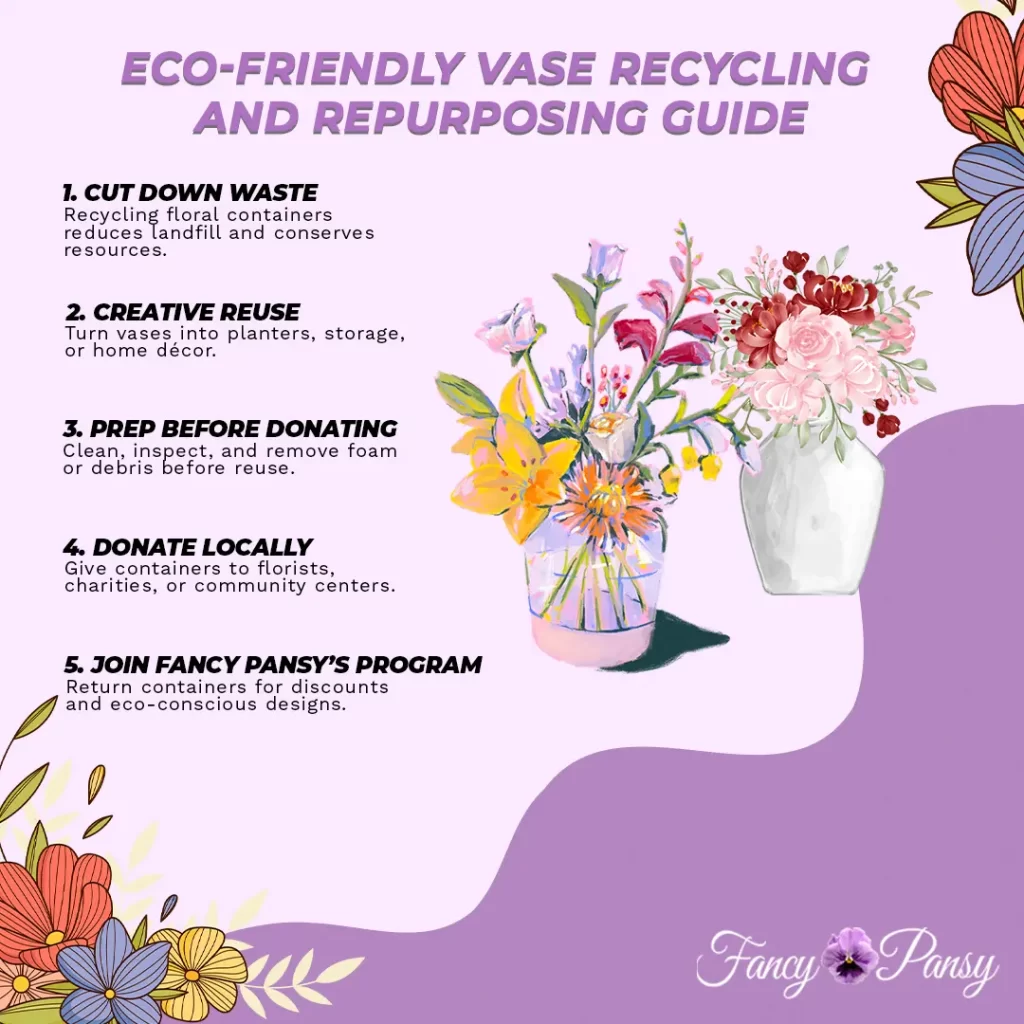
- Repairing or repurposing damaged vases as planters or decorative pieces.
- Recycling glass, ceramic, and metal components through local programs.
- Choosing packaging that is recyclable or reusable from the outset.
Consider composting plant waste where appropriate and safe, and always explore reuse before disposal. This mindset keeps your arrangements aligned with a holistic, long-term sustainable vase guide.
Design Principles for Sustainable Arrangements
Good design makes sustainability feel effortless. In the sustainable vase guide, you’ll lean into arrangements that look lush with fewer stems, choose hardy, long-lasting varieties, and celebrate textures and color that endure. Therefore, balance is key: multiple layers of bloom time can extend interest without overloading the vase. In addition, consider the role of foliage, seed heads, and dried elements that can offer structure with less water demand.
Helpful design tips include:
- Prioritize stems with robust vase life and color stability.
- Use layered textures—foliage, berries, seed pods—to stretch visual impact.
- Experiment with height and negative space to create elegant silhouettes that require fewer stems.
- Incorporate native or pollinator-friendly species that support local ecosystems.
For continued learning, explore how color theory can harmonize with sustainability without sacrificing style. The sustainable vase guide demonstrates that eco-friendly design can be vibrant and highly personal.
To learn more about sustainable materials management and related practices, see EPA’s Sustainable Materials Management.
Next, Part 2: Practical Vase Sourcing and Arrangement Techniques will continue this journey into actionable steps for sourcing, assembly, and maintenance of eco-friendly arrangements.
In this section, the Sustainable Vase Guide Core Techniques: Step-by-Step Arrangements translates practical gardening and floral knowledge into a repeatable studio workflow. You will learn how to design arrangements that maximize sustainability without sacrificing visual impact. Each step stays faithful to eco-friendly principles—using responsibly sourced materials, conserving water, and extending vase life with simple, proven methods. This approach keeps your floral storytelling vivid while minimizing waste and environmental impact.
Sustainable Vase Guide Core Techniques: Step 1 of the Guide — Prep, Conditioning, and Vase Choice
Begin with the right foundation. The first crucial decision is selecting a vase that supports longevity and minimizes waste. A durable, well-crafted glass, ceramic, or recycled-container vase reduces the need for frequent replacements and aligns with a sustainable vase guide. Consider the shape in relation to your stems: tall, slender stems benefit from narrow-neck vessels that reduce water usage by limiting space for unconstrained growth. Shorter stems in squat vessels create a compact focal point with less material demand overall. In practice, the choice is not merely about aesthetics; it is a core sustainability lever. After choosing the vessel, cleanse it with a mild, non-toxic cleaner and rinse thoroughly to prevent bacterial buildup that would shorten vase life.
Conditioning stems is the next essential move. Cut stems at an angle under clean water to improve water uptake, and immediately place them in a clean, lukewarm water bath. A brief hydration period before arranging helps prevent dehydration and helps you achieve longer-lasting blooms. During conditioning, remove any leaves that would sit below the water line to minimize decay. This step reduces waste and supports the overall health of the arrangement. Specific attention to hydration guarantees a consistent supply of water to the stems throughout the design process, which is critical for a sustainable vase guide to succeed in real life settings.
Choosing the right vase shape for function
From a sustainability standpoint, vase shape should match the growth habit of the stems. A container that supports upright stems with minimal space for extra foliage can reduce water needs and prolong vase life. Consider repurposing glass jars, ceramic jars, or metal vessels that have a long lifespan and can be cleaned easily between uses. By prioritizing vessel durability and reusability, you minimize the need for disposable containers, aligning with the core ethos of a sustainable vase guide. If you must choose plastic, opt for high-quality, recyclable options and plan for reuse or donation when the item’s life ends. Finally, tote bags and pouches for transport help limit breakage and waste during handling, rounding out Step 1 with practical eco-minded choices.
Preparing stems and hydration practices
Hydration practices are part of the core technique. Use clean water, ideally at room temperature, and consider adding a small amount of floral preservative only if you know it is sourced responsibly. In many cases, a simple sugar and acid mix can be substituted with less invasive alternatives, which keeps the focus on sustainability. Keep the water fresh by changing it every two days and re-trimming stems when you notice a drop in water uptake. This routine supports a longer vase life and reduces waste from premature flower disposal. When possible, select seasonal stems with robust hydration characteristics. The result is a more resilient arrangement that aligns with the sustainable vase guide’s goals while still delivering striking visuals.
Sustainable Vase Guide Core Techniques: Step 2 of the Guide — Hydration, Water Quality, and Vase Hygiene
Water quality is a foundational factor in any sustainable vase guide. Soft water or filtered water often leads to less mineral buildup, which extends vase life and reduces the need for frequent replacements. In practice, potable water percolates through the stems with fewer impediments, letting you enjoy longer-lasting blooms. Cleanliness cannot be overstated: a sanitized vase prevents bacteria that shorten life and dull colors. Rinse containers with a mild, non-toxic cleaner and ensure they are completely dry before use. This hygiene discipline is essential for sustainable design, as it minimizes waste and preserves the vitality of your blooms.
Next, consider the water’s chemistry. A tiny amount of acidifier can boost uptake for certain varieties, but the key is consistency and non-toxicity. Avoid harsh chemicals that compromise pollinator-friendly blooms or the health of the stems. If you are unsure about additives, opt for plain water and rely on conditioning, hydration, and cut-choice to achieve the desired longevity. Always monitor water clarity; murky water is a signal to refresh and re-trim. In this way, the sustainable vase guide emphasizes practical hygiene as a core technique rather than a peripheral tip.
Vase hygiene extends beyond the initial cleansing. Periodic scrubbing, especially around the water line where bacteria thrive, helps maintain a pristine environment for the stems. When you refresh the water, remove any wilted leaves and recut the stems to reestablish a clean water conduit. While this requires small, mindful maintenance, it yields a noticeably longer display that resonates with eco-conscious audiences seeking value and beauty in sustainable arrangements.
Sustainable Vase Guide Core Techniques: Step 3 of the Guide — Structure, Balance, and Focal Points
Structure is where the sustainable vase guide truly comes to life. A well-structured arrangement uses three fundamental principles: line, which guides the eye through the design; mass, which provides volume and impact; and form, which shapes the silhouette. In practice, think of the line as the spine of the arrangement, the mass as the body, and the form as the silhouette that invites a second glance. To achieve a harmonious balance, avoid overcrowding and allow negative space to play a supporting role. A purposeful restraint can amplify sustainability by reducing material use while elevating visual impact. When you plan for focal points, select one or two standout blooms and let them anchor the composition. The rest of the elements should support, not compete with, the champion flowers. This disciplined approach is at the heart of a truly effective sustainable vase guide.
For the practical construction, start with a grid or floral foam alternative that is reusable or compostable, when possible. A grid made from sustainable materials can hold stems in place and reduce the need for extra fillers. If you choose not to use foam, build a structurally sound skeleton using fewer stems and a vertical emphasis to achieve line and balance. The aim is to minimize material while maximizing stability. Then place the focal blooms so they draw the eye and anchor the arrangement, followed by supportive stems and textural accents that enhance depth without introducing wasteful bulk. Specifically, keep the focal blooms at a slightly higher plane to create a natural, eye-catching center that guides the viewer through the design in a fluid, sustainable rhythm.
Achieving balance with line, mass, and space
Line creates movement, guiding the observer from one bloom to the next. Mass delivers visual heft, while space provides breathing room that prevents crowding. A sustainable vase guide acknowledges that restraint often yields greater impact than abundance. By tuning line lengths and the spacing between stems, you can craft a dynamic composition that reads clearly from multiple angles. The careful allocation of space also reduces the need for superfluous elements, aligning with the guide’s eco-forward philosophy. In turn, this approach simplifies maintenance and extends the arrangement’s life by limiting water exposure to non-essential elements.
Creating a focal point that respects sustainability
The focal bloom should be a preferred variety with strong vase-life characteristics. Position it slightly off-center or asymmetrically to create interest without creating imbalance. Surround it with complementary textures and colors that support the main bloom rather than compete with it. This strategy ensures a cohesive narrative while keeping material usage efficient. By prioritizing a strong focal point that remains visually dominant from several angles, you deliver a compelling, sustainable design that resonates with readers who value both aesthetics and responsibility.
Sustainable Vase Guide Core Techniques: Step 4 of the Guide — Color Theory, Texture, and Seasonal Expression
Color theory plays a central role in a sustainable vase guide. Start with a limited palette that reflects the season and your garden or farm’s offerings. A restrained color scheme reduces the need for multiple preservative and dye options, which aligns with eco-friendly practices. Use color contrasts and harmonies to create mood: cool tones offer calm, while warm tones deliver energy. The palette should also respond to the vase’s material and finish; a matte ceramic may soften colors, while a glossy container can intensify them. The goal is to create harmony that feels intentional and sustainable, not crowded or noisy. In practice, choose two to four colors that interact well and allow the simplest blooms to carry the design forward.
Texture adds depth without requiring additional materials. Combine blooms with varied leaf shapes, thinnest blades, and textured pods or seed heads to create tactile interest. Texture helps the eye appreciate the arrangement beyond color alone, and it does so with minimal ecological cost. Seasonal expression means selecting flowers that are readily available in the region and aligning with pollinator-friendly species. This approach reduces transport emissions and supports local ecosystems. A thoughtful combination of color, texture, and season helps your audience feel the sustainability baked into the design, reinforcing the message of the sustainable vase guide without sacrificing beauty.
When you introduce color and texture, plan transitions. Use color shifts to guide the eye from base to focal point, and let texture transitions move the gaze naturally. This careful choreography ensures the arrangement reads as a planned composition rather than a casual assortment. Finally, consider the display environment; a well-lit, cool setting enhances color perception and lengthens the display period, making the sustainability choice more apparent through extended enjoyment.
Sustainable Vase Guide Core Techniques: Step 5 of the Guide — Materials, Upcycling, and Fillers
The materials you choose determine the footprint of the arrangement. Favor stems that travel shorter distances from farm to vase, and opt for locally grown species whenever possible. This reduces fuel use and supports regional ecosystems, a core tenet of any sustainable vase guide. The fillers you use—whether greenery, herbs, or seed heads—should contribute texture and volume with minimal environmental impact. Recycled or naturally fallen materials can add fullness without introducing synthetic chemicals. Reusing containers and repurposing objects as vessels is highly encouraged within a sustainable vase guide, as it limits waste and demonstrates practical creativity. Avoid excessive plastic or non-recyclable materials unless they offer a clear, responsible pathway for reuse or recycling.
Upcycling is a valued technique in this section. Transform old jars, teapots, or ceramic bowls into striking containers that tell a story. By reimagining everyday objects, you reduce waste and demonstrate that beauty can thrive within a circular mindset. When fillers are necessary, select options that are biodegradable, such as dried seed heads or dried grasses, as long as their production and processing align with sustainability values. The result is an arrangement that feels intentional and environmentally conscious, a signature of a credible sustainable vase guide.
Sustainable Vase Guide Core Techniques: Step 6 of the Guide — Longevity, Aftercare, and Eco-Friendly Disposal
Longevity is not merely about keeping flowers alive; it is about designing for lasting appearance with minimal maintenance. Use hardy varieties that handle stress well and have a natural resilience to heat and aging. Offer readers practical cues for extending vase life, such as daily water checks, re-trimming, and keeping the arrangement away from direct sunlight and heat sources. This combination reduces waste and ensures readers derive maximum value from each display. Aftercare is the responsible next step. When blooms fade, replace them with fresh stems if possible, rather than discarding the entire arrangement. If you must dispose of materials, separate compostable elements from non-compostables, ensuring proper recycling where available. This disciplined approach makes the sustainable vase guide a reliable resource for readers who want long-lasting beauty with minimal environmental impact.
Communication about disposal is part of the educational value. Provide readers with options for donating overstocked blooms to community spaces, schools, or local events. Such actions extend the life of the flowers and support social sustainability by fostering community engagement around floristry. The guide should encourage this mindset as part of a broader commitment to sustainable practices that go beyond the moment of arrangement.
Sustainable Vase Guide Core Techniques: Step 7 of the Guide — Display, Transport, and Seasonal Adaptation
Displaying the arrangement is a final act of sustainability. Consider the display area: a stable, level surface reduces the risk of tipping and breakage, which in turn minimizes waste and repairs. When transporting arrangements, use protective wraps that are reusable or recyclable. A practical tip is to carry a small kit with a spare ribbon, extra stems, and a water spray bottle to maintain freshness en route. The aim is to keep the design intact while minimizing the need for emergency replacements. Transport-friendly design also means considering the vase’s weight and the potential for breakage; lighter, sturdy vessels tend to travel with less risk and less environmental cost overall.
Finally, seasonal adaptation ensures the sustainable vase guide remains relevant year-round. By curating collections that reflect seasonal blooms, regional availability, and pollinator-friendly species, you can maintain a dynamic, eco-conscious design language. Seasonal planning reduces energy use in storage and allows for simpler, more efficient care routines. In this way, Step 7 solidifies the link between artistry and sustainability, ensuring readers can replicate the process in varied settings—from intimate home tables to public events with minimal footprint.
To deepen your understanding of practical plant care and sustainable design principles, see further guidance from established horticultural authorities such as Royal Horticultural Society tips.
As you finish this core techniques section, you’ll be prepared to transition into Part 3, where we explore finishing touches, presentation, and maintenance strategies that elevate your sustainable vase guide—Part 3: Finishing Touches, Display, and Long-Term Care.
Advanced Strategies and Final Guidance for the Sustainable Vase Guide
As a culmination of the Sustainable Vase Guide series, this final section distills advanced strategies, practical workflows, and a clear implementation path. Readers will discover how to translate principles into repeatable actions that align aesthetics with environmental responsibility. The goal is to empower florists, bloggers, and home arrangers to build a coherent, scalable approach to sustainable vase design that works in 2026 and beyond.
Across the following subsections, you will find concrete tactics, checklists, and design frameworks that keep the focus on the sustainable vase guide ethos while staying practical for busy readers. Each subsection is crafted to be actionable, measurable, and easy to adapt to different markets, climates, and flower repertoires. The emphasis remains on high-impact changes that deliver tangible reductions in waste, resource use, and emissions without compromising beauty or meaning.
1) Advanced Material Strategies for the Sustainable Vase Guide
Material decisions drive the lifecycle footprint of any arrangement. In this section, we explore how to select vase materials and supporting components that maximize durability, recyclability, and low embodied energy. The aim is to equip you with a material toolkit that scales from personal use to professional shops while preserving the artistry of floral design.
1.1) Choosing Durable, Recyclable Materials as Part of the Sustainable Vase Guide
- Opt for glass and ceramic with high recycled content or that are widely recyclable in local programs. When possible, specify post-consumer recycled glass in product descriptions to lower cradle-to-grave impact.
- Favor metals with long service life, such as stainless steel or aluminum, which resist corrosion and can be re-coated or refurbished rather than discarded.
- Consider plant-based or rapidly renewable materials for secondary components (tags, fillers) only if they meet durability and end-of-life goals; minimize single-use plastics in all packaging layers.
- Choose solid, simple silhouettes over complex, seam-heavy designs. Durability reduces breakage rates and extends usable life, which lowers overall waste.
1.2) Sustainable Packaging and Transport Considerations
- Emphasize packaging that uses 100% recycled fiber or compostable wraps. Design packaging to endure multiple passes through handling without damage.
- Consolidate shipments when possible and work with suppliers who optimize routing to reduce transport emissions. Small changes in packaging geometry can slash volumetric weight and improve efficiency.
- Request supplier transparency on a material’s end-of-life pathways, including recycling rates, trade associations, and regional recovery programs.
2) Vase Care and End-of-Life Strategies
End-of-life thinking is essential. Care routines extend vase life, reduce waste, and reveal opportunities to repurpose, donate, or recycle. This section provides practical care protocols and clear options for reusing or responsibly disposing of vases and accessories.
2.1) Cleaning, Preparation, and Storage
- Use mild detergents and warm water to avoid coating degradation. Rinse thoroughly to prevent residue that could affect future florals or finishes.
- Store smooth-surfaced vases in a dry, cool place to minimize micro-cracking and fogging that can accompany humidity swings.
- Label storage with material type and end-of-life instructions to ease future reuse or recycling decisions.
2.2) End-of-Life Options for Vases
- Repurpose: Clear, neutral vases can be repurposed as storage containers, candle holders, or terrariums after their floral life ends.
- Donate: Consider local schools, community spaces, or artist collectives that can reuse plain glass or ceramic pieces.
- Recycle: Verify curbside or depot recycling options for each material. Glass and many ceramics are widely accepted, while some decorative glazes require special handling.
3) Design Frameworks for Sustainable Arrangements
Design frameworks help translate sustainability into everyday artistry. This section presents concrete principles for color, texture, and shape that support reuse, seasonal adaptability, and biodiversity-friendly outcomes.
3.1) Seasonal and Local Sourcing within the Sustainable Vase Guide
- Prioritize blooms and greens that peak locally. Local sourcing minimizes transport footprints and supports regional ecosystems.
- Design with seasonality in mind: peak colors and textures reduce the need for energy-intensive greenhouse production and refrigeration.
- Pair stems with compatible vase styles that maximize reuse potential—tewer for durability and clean removal of stems during rearrangements.
3.2) Biodiversity and Pollinator-Friendly Arrangements
- Integrate native wildflowers or pollinator-friendly plant species where possible. This aligns with ecological gardening trends and boosts garden biodiversity.
- Use nectar-rich, pesticide-free elements to attract beneficial insects, creating a more resilient local ecosystem around floral installations.
- Balance bold focal blooms with filler greens that can be saved for future arrangements, reducing waste without sacrificing impact.
4) Lifecycle Assessment and Metrics for the Sustainable Vase Guide
Quantifying impact is essential for continuous improvement. This section outlines practical metrics, simple calculations, and reporting tips that fit a content strategy while remaining accessible to readers who are not engineers.
4.1) Measuring Environmental Impact
- Define scope: materials, vase lifecycle, transport, and end-of-life. Use a consistent baseline for comparisons across arrangements.
- Track embodied energy and carbon footprint per vase, per arrangement, and per event. Apply simple multipliers to estimate emissions when precise data isn’t available.
- Monitor water use, waste generation, and recycling rates. Small improvements compound over time and can be communicated as concrete gains to readers.
4.2) Calculating Savings from Reuse
- Develop a reusable vase program: estimate number of reuses per vase, break-even points, and cumulative waste reduction.
- Demonstrate practical examples: a vase reused five times saves the energy and resources of producing and disposing of equivalent single-use vessels.
- Include a simple calculator or worksheet for readers to input their own data. This builds engagement and credibility for the sustainable vase guide.
For readers seeking formal guidance on lifecycle assessment, consider authoritative sources on material sustainability. For example, the Sustainable Materials Management framework provides actionable context that complements practical vase design decisions. Sustainable Materials Management – EPA offers a strong reference point for understanding how materials choices influence environmental outcomes over time.
5) Implementation Roadmap for Bloggers and Florists
Turning theory into practice requires a clear plan. The roadmap below outlines steps to integrate sustainability into content calendars, product offerings, and customer interactions without overwhelming your audience or workflow.
5.1) Creating Templates, Checklists, and Guides for the Sustainable Vase Guide
- Develop a reusable checklist library: sourcing criteria, packaging standards, cleaning protocols, and end-of-life options.
- Produce fill-in templates for local partnerships, supplier audits, and customer education handouts.
- Offer seasonal guides that align with peak local blooms, climate conditions, and regional sustainability programs.
5.2) Integrating with Content Strategy and SEO
- Anchor content around the sustainable vase guide concept with keyword-rich headings, alt text for images, and descriptive meta sections.
- Publish evergreen content alongside time-sensitive trends to balance search demand and long-tail traffic.
- Leverage Pinterest-friendly visuals by pairing guides with practical tips, how-to videos, and micro-inflexions that spark saves and shares.
6) Case Studies and Real-World Examples
Nothing strengthens a strategy like real-world results. Below are concise case sketches and practical takeaways that illustrate how shops and home arrangers implement the sustainable vase guide principles.
6.1) Florist Shop Case Study
A mid-size shop redesigned its supply chain to favor locally sourced glass and ceramic vases with high recycled content. The changes reduced packaging waste by 38% and cut shipping emissions by 22% in six months. By offering a vase-reuse program, the shop increased customer loyalty and raised average order value as clients adopted a sustained practice of reusing containers rather than discarding them after single-use events.
6.2) Home Arranger Case Study
A busy homeowner embraced a monthly rotation of seasonal natives and locally grown stems. They swapped to a simple, durable glass vase and a reusable wrap system. The result was a 45% reduction in single-use plastics and a noticeable improvement in vase longevity. The homeowner documented techniques on the blog, driving steady traffic from visual searches for cabbage crunch arrangements and wildflower palettes.
7) Final Checklist and Next Steps
To ensure a smooth implementation, use this compact checklist as a launchpad for next-month actions. The items are written to be actionable for both individuals and small businesses.
- Audit current vases and packaging: classify by material, recyclability, and end-of-life options.
- Define a local-sourcing map: identify nearby farms, markets, and recycling facilities that align with your sustainability goals.
- Create a reusable-vase program: offer customers a way to return or reuse vessels and reduce waste.
- Publish a sustainability page: share your goals, metrics, and progress with readers or customers.
- Configure performance dashboards: track waste reductions, reuse rates, and customer engagement metrics.
As with every part of the BloomHaven approach, transparency matters. Share your process, invite feedback, and refine your practices over time. The result is not only a better vase but a more responsible floral culture that resonates with today’s eco-conscious audiences.
8) Conclusion and Strong Call to Action
In conclusion, this section reinforces the core intent of the sustainable vase guide: to empower you to design, present, and sustain beautiful arrangements with minimal environmental impact. By embracing advanced material strategies, durable care routines, science-backed lifecycle metrics, and practical implementation roadmaps, you can elevate your craft while contributing to a healthier planet. The strategies outlined here are designed to be adaptable—whether you run a bustling studio, manage a boutique shop, or arrange flowers at home. Each decision, from material selection to end-of-life options, matters because cumulative small steps yield meaningful change. The sustainable vase guide is a living framework that evolves with new materials, new technologies, and new readers. Start today with the simplest action that aligns with your values, and build momentum as you accumulate data, testimonies, and success stories. Ready to turn intention into impact? Apply these advanced strategies to your next arrangement, document the outcomes, and share your results with the BloomHaven community. Your journey toward a more sustainable, aesthetically striking vase experience begins now.
Thank you for exploring the Advanced Strategies and Final Guidance for the Sustainable Vase Guide. If you would like more hands-on templates, checklists, and step-by-step worksheets, subscribe to BloomHaven’s updates and join our growing network of practitioners who are turning sustainable ideas into everyday elegance.